Which Santorini driving route is worth renting a car for?
6 min read
The rental day that genuinely beats Santorini’s buses is a southern loop: Fira → Pyrgos → Akrotiri → the lighthouse → Perissa or Kamari. These stops sit on different spokes of the Fira-centred bus network, so linking them by public transport involves backtracking. By car they form a coherent full day, with a hill village in the morning, archaeology around midday and the open southwest coast later. Do not add Oia: its sunset traffic and parking turn a good road trip into a queue.
Compare a small rental car for the southern loop
Start in Pyrgos, before the lanes get busy
Leave the car at the edge of Pyrgos rather than following navigation into the old centre. The reward is the walk: vaulted passages, steep alleys and views across both sides of the island from the fortified upper village. Morning is cooler and the village works as an orientation point; you can see how close the east coast looks while the caldera edge remains a separate ridge.
Continue southwest through the wine-growing interior towards Akrotiri. If tasting wine is part of the day, the driver should not drink; a guided wine or island tour is the better product for everyone in the group. Without a tasting, Megalochori is a plausible short walking stop, but keep the day focused rather than trying to collect every village.
Akrotiri first, beaches second
At Akrotiri, park by the archaeological site and allow the visit to determine the pace. Opening hours and admission can change seasonally, so use the official Greek Ministry of Culture information rather than building the drive around an old timetable. The excavated settlement is shaded; the surrounding coast is not.
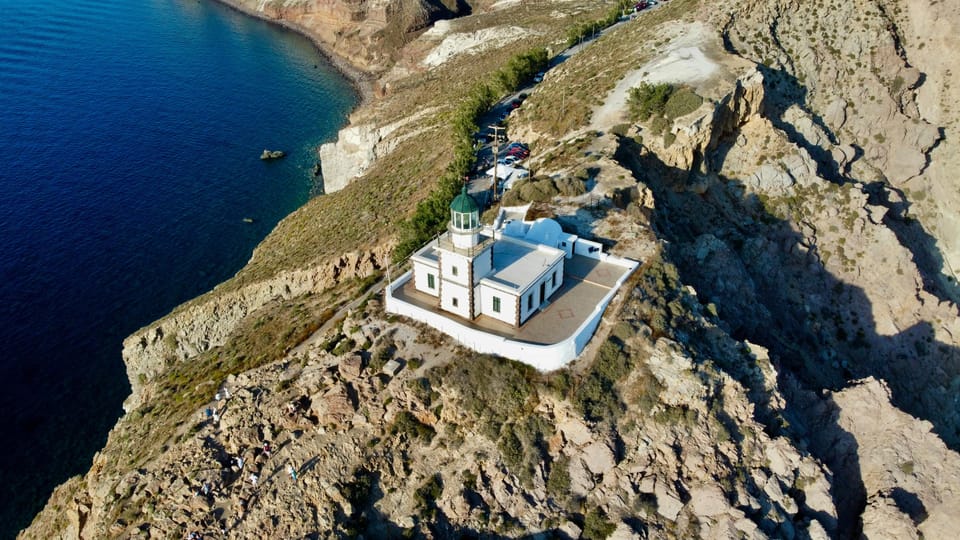
Red Beach is not a reason to force the car down every narrow road. Follow current local signs and barriers, and treat any cliff-path closure seriously. The vehicle’s real advantage here is continuing to the Akrotiri lighthouse at the island’s southwestern end, where buses are not the practical option. The final roads are exposed, and the landscape is the point: low volcanic ground, sea on both sides and fewer buildings than around Fira.
For a swim, finish on the east coast at Perissa or Kamari. Both are flatter and easier for an evening meal than the caldera villages. Choose one, not both. The cross-island drive is short on a clear road, but summer traffic and village junctions make stopwatch planning unhelpful; leave a generous daylight margin for the return.
Summer and cooler-season versions
In summer, collect the car early, carry water and put the archaeological visit before the strongest heat. Parking pressure rises through the day, while the lighthouse has little shelter. In a cooler month the walking is easier, but daylight is shorter and some businesses reduce their hours. Check each attraction and the rental desk’s return time for your actual date.
If the forecast is windy, drive more slowly on open sections and leave extra space around scooters and ATVs. After dark, unlit stretches and unfamiliar junctions demand attention. None of that makes the route extreme; it simply makes a calm daytime loop better than racing back from Oia at night.
When the guided tour wins
Skip the rental if nobody wants to drive, if wine tasting is central, or if your visit is a short cruise stop with a fixed return. A guided island circuit takes away the parking problem and keeps the schedule together, though it gives you less freedom at the villages. For everyone else, the southern loop is the one car day I would buy: it connects places that the bus map keeps apart and avoids using the vehicle where Santorini is least car-friendly.