Santorini cooking class: Greek recipes, lunch and wine
Updated October 9, 2026 · 4 min read
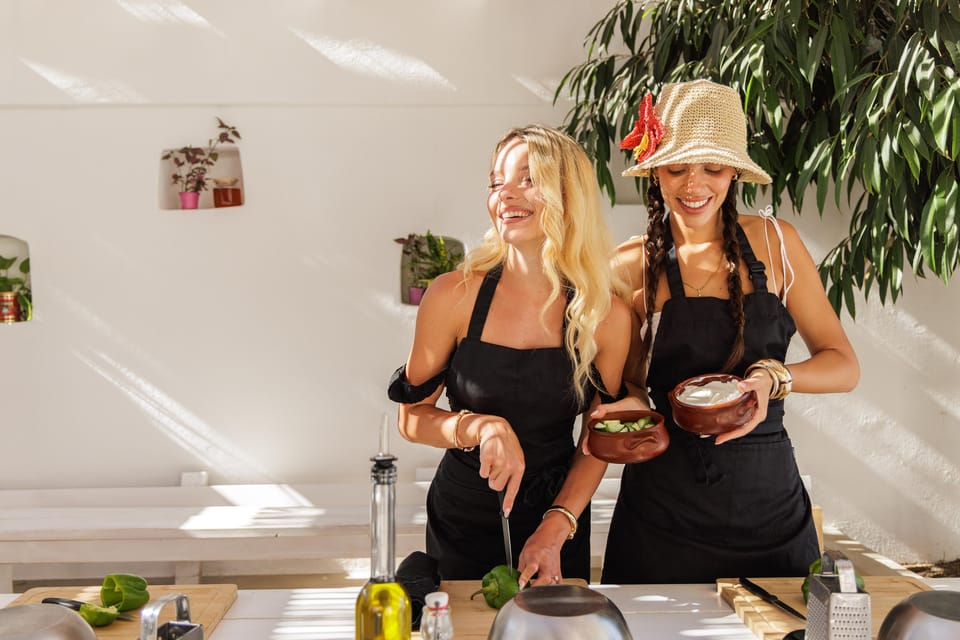
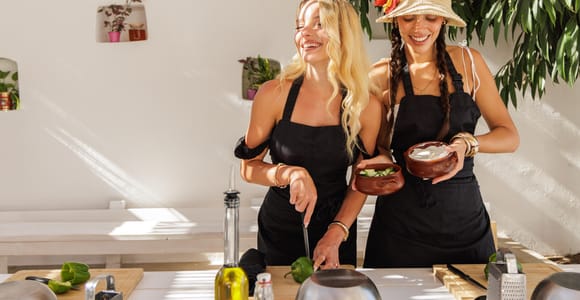
A cooking class gives you something a sightseeing stop cannot: time to understand how local ingredients become a meal. The Cooking Class with Lunch and Wine Tasting lasts three hours and combines guided preparation with eating what the group has made.
Hands-on class or demonstration?
The important distinction is participation. Check whether each guest cooks, whether tasks are shared and how large the group can be. “Cooking class” can describe anything from preparing several dishes to watching most of the work. The booking page should also state whether lunch and the wine tasting are included rather than optional additions.
Santorini’s volcanic soil is part of the island’s food story. Local cooking commonly highlights produce such as tomatoes, fava and aubergine, but menus change with season and operator. Treat any sample menu as an indication, not a promise of a particular dish.
Dietary needs need a reply, not an assumption
Tell the operator about allergies and dietary restrictions before booking and ask what can genuinely be adapted. A meat-free menu does not automatically mean that every shared preparation surface or ingredient suits a severe allergy. Wine is also part of this particular experience, so a traveller who does not drink should confirm what alternative is offered.
When this is the better choice
Choose the class when the process and conversation matter as much as the meal. It also works well in the middle of a busy itinerary because it replaces lunch rather than adding another viewpoint. If you only want to taste local food without cooking, a guided food walk in Fira is the more direct option. If wine is the priority, compare a dedicated Santorini wine tour instead.